
This section examines how these games work under the bonnet, what their RTP and volatility figures mean in practice, and how to approach them sensibly. Whether you favour cascading reels, fish-collection mechanics or multiplier-driven free spins, understanding the fundamentals will help you choose the right fit—and avoid the classic pitfalls that trip up even experienced players.
Games tested: slot games
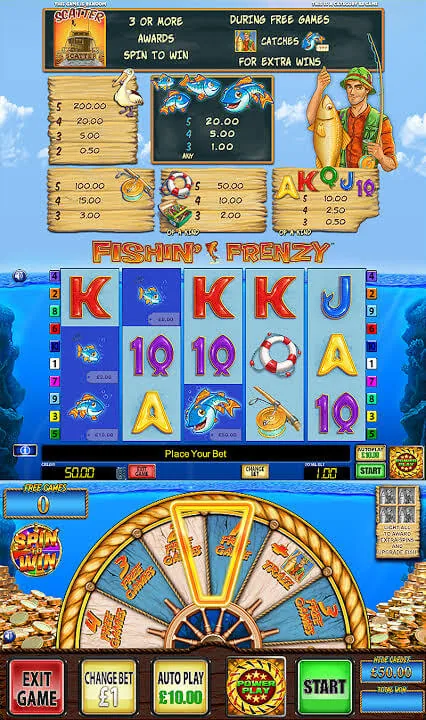
Fishin Frenzy

Big Bass Splash

Gates of Olympus

Sugar Rush 1000
- Fishin Frenzy — A low-volatility staple with straightforward fisherman wilds and a widely accessible free-spins round.
- Big Bass Splash — Refined fish-collection mechanic with higher volatility and a proven track record among bass-series fans.
- Gates of Olympus — Tumble mechanic and random multipliers deliver explosive variance and massive ceiling potential.
- Sugar Rush 1000 — Cluster-pays innovation with tiered multipliers and a faster pace suited to shorter sessions.
Comparison table
| Game | Provider | Principle | Who it suits |
|---|---|---|---|
| Fishin Frenzy | Reel Time Gaming / Blueprint | Paylines with fisherman wild collection in free spins | Low-risk players wanting steady feedback and longer sessions |
| Big Bass Splash | Pragmatic Play | Fish-value collection triggered by fisherman wilds | Patient players comfortable with high volatility and infrequent features |
| Gates of Olympus | Pragmatic Play | Tumble mechanic with accumulating multipliers in free spins | High-risk tolerance, chasing maximum ceiling potential |
| Sugar Rush 1000 | Pragmatic Play | Cluster-pays with escalating multipliers per tumble sequence | Medium-to-high variance preference, faster-paced sessions |
What defines a modern slot game
At their core, slot games are probabilistic engines: each spin outcome is determined by a random number generator, and the return-to-player percentage (RTP) describes the theoretical long-run payback. A slot with 96 per cent RTP will, over millions of spins, return £96 for every £100 wagered—but individual sessions can deviate wildly from that average.
Volatility—sometimes called variance—measures how those returns are distributed. Low-volatility games pay smaller wins more frequently; high-volatility titles deliver larger payouts less often, with longer dry spells in between. The four games reviewed here span that spectrum, from Fishin Frenzy's gentle ripples to Gates of Olympus's white-water rapids.
Modern slots layer bonus mechanics on top of the base game: free spins, multipliers, cascading reels, collection features. These alter the rhythm and risk profile, so understanding both the maths and the features is essential before you commit real money.
How the mechanics work in practice
Fishin Frenzy uses a traditional payline structure with a fisherman wild that appears only on the middle reel during the base game. Land three or more scatter symbols and you trigger ten free spins; during that round the fisherman collects all visible fish symbols and awards their cash values, turning a simple format into a focused bonus hunt.
Big Bass Splash refines the collection concept: fish symbols carry values, but they pay only when a fisherman wild lands on the same spin. The free-spins round introduces retriggers and progressive hooks that can raise the fisherman count, amplifying the ceiling. Volatility is higher, so dry runs are longer, but the payoff structure rewards patience.
Gates of Olympus abandons paylines entirely in favour of a tumble mechanic—winning symbols vanish and new ones drop in, creating chain reactions within a single paid spin. Random multipliers up to 500× can appear on any tumble, and during free spins those multipliers accumulate rather than reset. The result is extreme variance: most spins return nothing, but a cascading sequence with stacked multipliers can deliver four- or even five-figure multiples of your stake.
Sugar Rush 1000 adopts cluster-pays logic: wins form when groups of matching symbols touch horizontally or vertically. Multipliers persist and grow with each tumble, resetting only when the sequence ends. The format suits quick sessions and offers medium-to-high volatility, sitting between the steadiness of Fishin Frenzy and the chaos of Gates of Olympus.
Choosing the right game for your style
Your choice should align with three factors: session budget, risk tolerance and preferred rhythm. If you want longer playtime and steadier feedback, Fishin Frenzy's low volatility and modest hit frequency will stretch a £20 bankroll further than the other three.
Players chasing substantial multipliers and willing to endure long losing streaks will gravitate toward Gates of Olympus or Big Bass Splash. Both demand patience and a larger cushion—it is not unusual to burn through fifty or a hundred spins without triggering the main feature, so bankroll discipline is non-negotiable.
Sugar Rush 1000 occupies the middle ground: its cluster mechanic delivers more frequent small wins than Gates of Olympus, yet the multiplier escalation can still produce sharp spikes. It is a reasonable compromise if you want volatility without the longest droughts.
RTP figures matter, but context is key. A game at 96.5 per cent RTP and high volatility will feel very different from one at 96 per cent RTP and low volatility, even though the long-run edge is similar. Check the paytable and volatility rating—most reputable providers publish both—and match them to your comfort zone.
Classic mistakes and how to sidestep them
The most common error is misunderstanding RTP as a session guarantee. A 96 per cent return means nothing over ten or even a thousand spins; variance dominates in the short term, and no amount of 'due' thinking will change the maths. Each spin is independent.
Chasing losses is the second pitfall. High-volatility games like Gates of Olympus can drain a bankroll quickly, and the temptation to double stakes after a cold streak is powerful—but doing so only accelerates loss and increases the risk of hitting table limits before a bonus lands. Set a session budget in advance and walk away when it is gone.
Another misstep is ignoring the bonus mechanics. Fishin Frenzy's free spins are relatively predictable; Gates of Olympus's multiplier tumbles are anything but. If you do not enjoy sitting through long stretches with no feature, high-variance slots will frustrate rather than entertain. Play styles and game design must align.
Finally, many players skip demo mode entirely and jump straight to real-money spins without grasping the rhythm or feature frequency. Demos cost nothing and reveal whether a game's pacing suits you; use them.
Where to practise: demo modes and their limits
Every game reviewed here is available in demo mode at partner casinos and directly on provider sites. Demo play uses the same RNG and maths model as real-money versions, so hit frequency, volatility and bonus behaviour are identical—only the financial stakes are absent.
Demos are invaluable for learning bonus triggers, testing stake levels and gauging whether a game's rhythm feels right. Spend twenty or thirty minutes in demo mode before committing funds; you will quickly discover whether Big Bass Splash's patience requirement or Sugar Rush 1000's pace suits your temperament.
That said, demo mode cannot replicate the emotional weight of real money. Risk tolerance, decision-making and stop-loss discipline all shift when actual funds are at stake, so treat demo sessions as reconnaissance rather than gospel. What feels comfortable at zero cost may feel very different with a £50 deposit on the line.
Most licensed casinos offer both instant-play demos (no registration) and logged-in demo modes that track session stats. The latter can help you understand your typical session length and loss rate before you wager real money.
Responsible play: numbers, not narratives
Slots are entertainment with a built-in cost: the house edge ensures that, over time, you will lose money. RTP percentages describe the aggregate, not your next hundred spins, and no system, pattern-spotting or timing strategy changes that fact.
Set a budget you can afford to lose entirely, and treat it as the price of the session—not an investment with expected returns. If you find yourself chasing losses, increasing stakes to 'win it back' or playing beyond your planned stop point, those are red flags.
All four games are restricted to players aged eighteen and over. If gambling is affecting your finances, relationships or mental health, seek support from a service such as GamCare or BeGambleAware. The maths does not care about your circumstances, and the games themselves offer no mechanism to limit harm—that responsibility sits with you.
Use deposit limits, session timers and self-exclusion tools where available. Fishin Frenzy, Big Bass Splash, Gates of Olympus and Sugar Rush 1000 are well-designed games, but they are designed to take money over time. Enjoy them as entertainment, understand the costs, and know when to stop.
Frequently asked questions
What does RTP mean and why does it vary?
RTP—return to player—is the theoretical percentage of total wagers a slot returns over millions of spins. A 96 per cent RTP means £96 back per £100 wagered in the very long run; individual sessions will deviate sharply. Some providers offer multiple RTP configurations, so always check the paytable at your chosen casino.
Can I improve my chances by timing spins or changing stakes?
No. Each spin is independent, determined by a random number generator. Past results, stake size and timing have no bearing on future outcomes. RTP and volatility are fixed by the game's maths; no playing strategy alters them.
Should I play high-volatility slots with a small bankroll?
Not advisable. High-volatility games such as Gates of Olympus and Big Bass Splash can go dozens or hundreds of spins without a significant win. A small bankroll will be exhausted quickly. Match volatility to your budget: low-variance games stretch funds further, high-variance games demand a larger cushion and stronger discipline.